
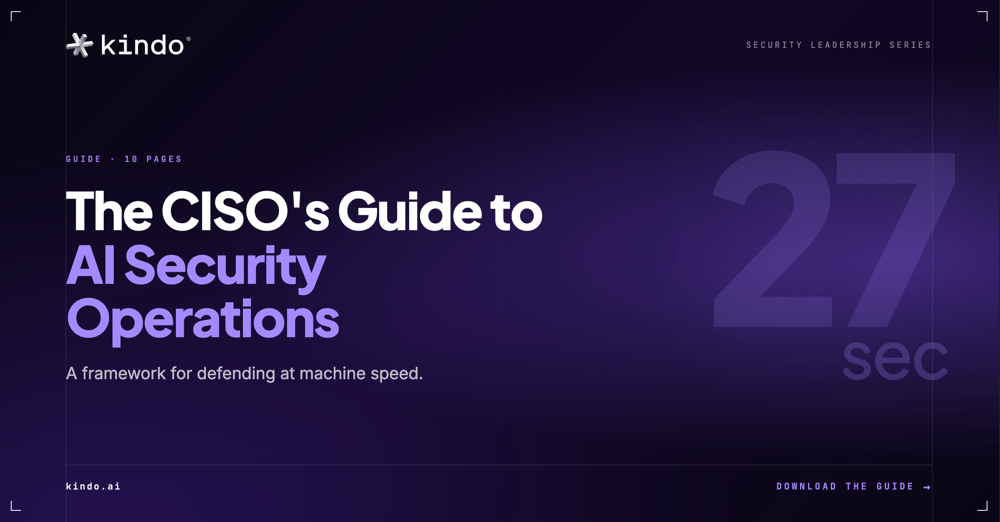
The CISO's Guide to AI Security Operations
Adversary breakout is now 27 seconds, but your SOC is build for days.
That gap isn't a staffing problem and you can't hire your way out of it. Adversary tooling has automated. Defender tooling mostly hasn't. Every alert sitting in a queue for 40 minutes is a 2,400x time advantage you're handing the other side.
Inside the guide:
- The numbers your board needs to see
- Where current SOC tools fall short, specifically
- What shadow AI is doing to your attack surface from inside
- The three layers of AI in security ops, and why Layer 3 is where ROI lives
-
What autonomous SecOps looks like in production

Your AI Transformation Begins in Operations
With Kindo, you simply describe intent, and Kindo executes with policy, approvals, and evidence. Results take shape as artifacts like pull requests, tickets, and reports. Chat Actions + Agents create a trusted automation loop that scales without losing adaptability.
Reduce noise, enrich alerts, and prioritize what matters.
Scan privileges, route approvals, and enforce least privilege.
Take a CVE from scanner to verified PR with rollback.
Build a live network map, check reachability, and propose the changes needed.
Auto-collect evidence, enforce policy, and generate audit reports.
Turn intel into tested detections with mapped playbooks.
